

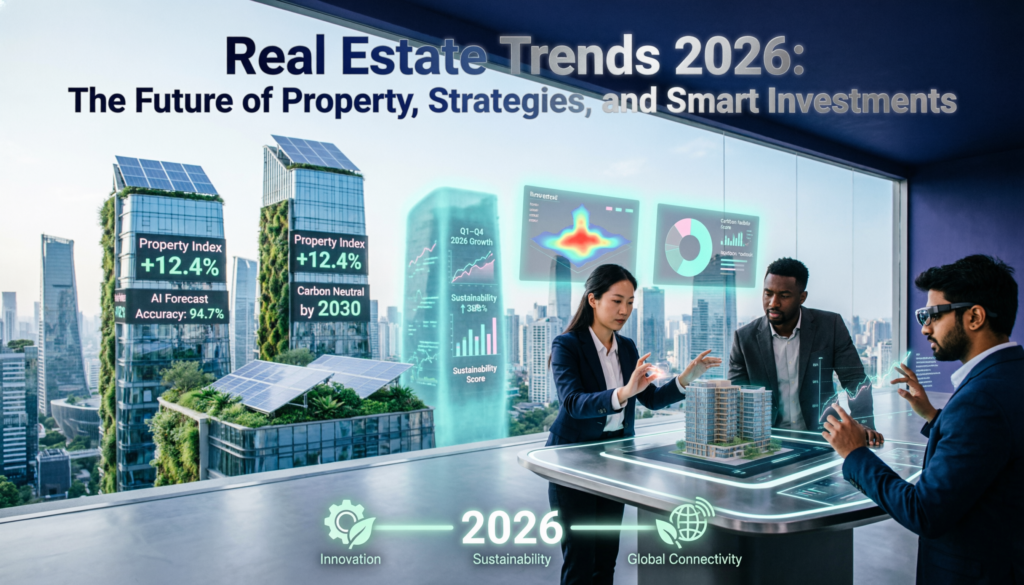
Real Estate Trends 2026 are reshaping how people buy, invest in, and develop property. From smart homes and sustainable construction to technology-driven transactions, the real estate industry is entering a new era.
Real estate has always been one of the most trusted wealth‑building assets, but the way people buy, sell, invest, and live in property is changing faster than ever before. From smart homes and sustainable buildings to digital transactions and evolving buyer expectations, the real estate industry is undergoing a powerful transformation.
Whether you are a first‑time homebuyer, an experienced investor, a developer, or simply someone curious about property trends, understanding today’s real estate landscape is essential. This in‑depth blog explores the latest real estate trends, emerging opportunities, investment strategies, and practical insights that define the modern property market.
1. The Changing Face of Real Estate
Real estate is no longer just about location and price. Today, buyers and investors consider lifestyle, technology, sustainability, and long‑term value before making decisions.
Key Shifts in the Industry
• Digital‑first property searches – Buyers now begin their journey online using property portals, virtual tours, and drone videos. • Experience‑driven housing – Homes are designed around comfort, wellness, and community rather than just square footage. • Hybrid living concepts – Work‑from‑home culture has increased demand for flexible spaces, home offices, and mixed‑use developments. • Data‑driven decisions – Developers and investors rely on analytics, AI tools, and market insights to reduce risk.
These shifts are redefining how real estate projects are planned, marketed, and sold.
2. Residential Real Estate: What Buyers Want Today
Modern homebuyers are informed, selective, and value‑driven. Emotional appeal matters, but functionality and future potential matter even more.
Top Residential Trends
a. Smart Homes
Smart lighting, security systems, voice‑controlled devices, and energy management solutions are becoming standard features rather than luxury add‑ons.
b. Sustainable Living
Eco‑friendly construction, rainwater harvesting, solar panels, and green building materials attract environmentally conscious buyers and reduce long‑term costs.
c. Community‑Centric Projects
Gated communities with clubhouses, parks, gyms, walking tracks, and co‑working spaces are in high demand, especially among young families.
d. Compact Yet Functional Layouts
Buyers prefer intelligently designed homes that maximize space usage without increasing costs.
3. Commercial Real Estate: Adapting to a New Economy
Commercial real estate has evolved significantly due to changing business models and workforce habits.
Emerging Commercial Property Trends
• Flexible office spaces and co‑working hubs • Retail spaces focused on experience rather than volume • Highway‑facing commercial properties for visibility • Mixed‑use developments combining retail, office, and residential units
Businesses today look for locations that enhance brand visibility, employee well‑being, and operational efficiency.
4. Real Estate as an Investment Opportunity
Property remains a strong long‑term investment when chosen wisely.
Why Real Estate is Still a Smart Investment
• Tangible and appreciating asset • Protection against inflation • Multiple income streams (rent + appreciation) • Portfolio diversification • Tax benefits in many regions
Popular Investment Options
- Residential rental properties
- Commercial leasing spaces
- Pre‑launch and under‑construction projects
- Land and plotted developments
- Real Estate Investment Trusts (REITs)
Smart investors focus on growth corridors, infrastructure development, and long‑term demand.
5. The Role of Technology in Real Estate
Technology has revolutionized how real estate operates.
PropTech Innovations
• Virtual reality property tours • AI‑based pricing and demand prediction • Online documentation and e‑registration • Blockchain for secure transactions • CRM tools for property management
These innovations increase transparency, efficiency, and buyer confidence.
6. Sustainable and Green Real Estate
Sustainability is no longer optional—it is a necessity.
Benefits of Green Buildings
• Lower utility costs • Healthier living environments • Higher resale value • Compliance with future regulations • Positive environmental impact
Green certifications and energy‑efficient designs are now major selling points.
7. Location Still Matters—But Differently
While location remains crucial, the definition of a “good location” has expanded.
New Location Priorities
• Connectivity to highways and transit hubs • Proximity to employment centers • Access to schools, hospitals, and malls • Upcoming infrastructure projects • Future development potential
Tier‑2 and emerging cities are witnessing rapid growth due to affordability and improved infrastructure.
8. Tips for First‑Time Homebuyers
Buying your first home is a major milestone.
Smart Buying Tips
• Set a realistic budget • Check legal approvals and documentation • Research the developer’s reputation • Evaluate future resale value • Visit the site personally • Understand maintenance costs
Patience and due diligence can save years of regret.
9. Challenges in the Real Estate Sector
Despite growth, the industry faces challenges.
Common Issues
• Rising construction costs • Regulatory compliance • Market fluctuations • Financing constraints • Delays in project delivery
Transparency, strong regulations, and technology adoption are helping overcome these challenges.
10. The Future of Real Estate in 2026
The future of real estate is innovative, sustainable, and customer‑centric.
What Lies Ahead
• AI‑driven smart cities • Increased demand for rental housing • Digitally managed properties • Net‑zero energy buildings • Personalized living spaces
Developers who adapt to these changes will lead the market.
Conclusion
Understanding Real Estate Trends 2026 is essential for buyers, investors, and developers who want to stay ahead in a rapidly evolving property market.
Real estate continues to be one of the most powerful tools for building wealth and securing a stable future. However, success in today’s market depends on awareness, adaptability, and informed decision‑making.
Whether you are purchasing a dream home, investing for returns, or developing the next landmark project, staying updated with real estate trends is the key to long‑term success. The industry is evolving—and those who evolve with it will thrive.