
The real estate industry has traditionally been associated with large investments and significant financial commitments. For decades, buying property required a substantial amount of capital, making it difficult for many individuals—especially young investors—to enter the market. However, a new trend is changing this reality: fractional real estate investing.
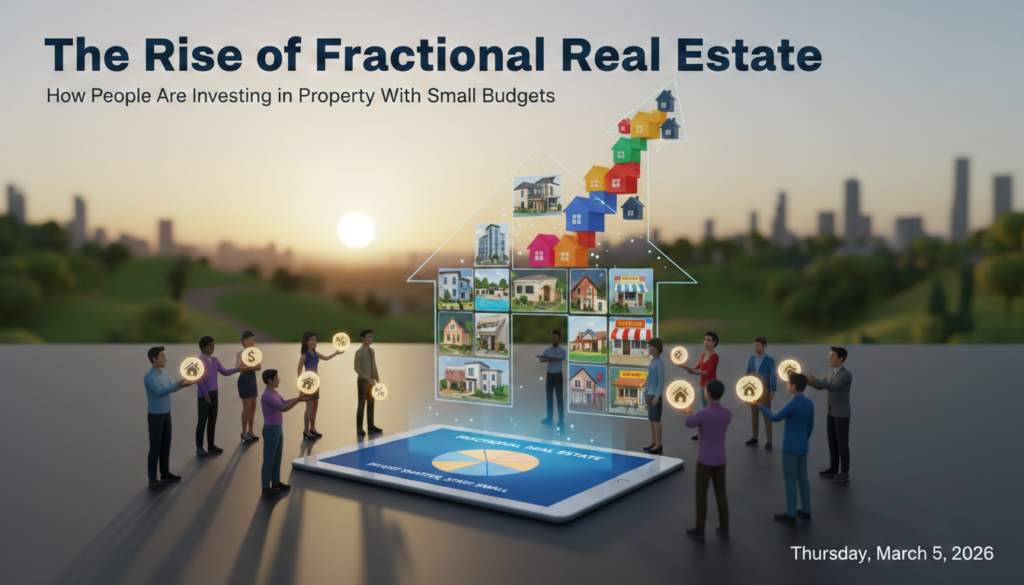
Fractional real estate is rapidly gaining popularity because it allows people to own a portion of a property with a relatively small investment. Instead of purchasing an entire property, multiple investors pool their money together and own shares in a property. This innovative model is opening the doors of property investment to a wider audience.
In this blog, we will explore what fractional real estate is, how it works, its benefits, risks, and why it is becoming one of the most talked-about trends in the property market.
What Is Fractional Real Estate?
Fractional real estate refers to a method of property ownership where multiple investors share ownership of a single property. Each investor owns a fraction or percentage of the property based on the amount they invest.
For example, instead of buying a $500,000 property alone, 50 investors might each invest $10,000 to collectively purchase the property. Each investor then owns a small share and receives a portion of the rental income and potential profits when the property is sold.
This model makes real estate investment more accessible, flexible, and affordable for people who cannot afford to buy an entire property.
Why Fractional Real Estate Is Becoming Popular
Several factors are driving the rapid growth of fractional property investment.
1. Lower Investment Requirements
Traditional real estate investing often requires large down payments and long-term financial commitments. Fractional real estate removes this barrier by allowing investors to start with smaller amounts.
Many fractional investment platforms allow investors to start with a few hundred or a few thousand dollars, making real estate accessible to beginners.
2. Diversification Opportunities
Diversification is a key principle in investing. Instead of investing all their money into one property, investors can spread their funds across multiple properties in different locations.
This reduces risk and allows investors to build a more balanced portfolio.
For example, an investor might own small shares in:
- A residential apartment building
- A commercial office space
- A vacation rental property
- A retail shopping center
This diversification can help protect against market fluctuations.
3. Passive Income Potential
Fractional real estate investments often generate rental income that is distributed among the investors based on their ownership percentage.
For instance, if a property generates $50,000 in annual rental income and an investor owns 5% of the property, they may receive 5% of the income, after expenses.
This makes fractional real estate attractive for individuals seeking passive income opportunities.
4. Access to Premium Properties
High-value properties such as luxury apartments, commercial buildings, or vacation homes are usually out of reach for most investors.
Fractional ownership allows investors to participate in these premium properties without needing millions of dollars.
This means investors can benefit from high-quality real estate assets that were previously only accessible to wealthy buyers or large investment firms.
How Fractional Real Estate Works
The process of fractional real estate investing is usually simple and straightforward.
Step 1: Choose a Property Platform
Many online platforms specialize in fractional property investments. These platforms list properties that are available for shared ownership.
Step 2: Select a Property
Investors can browse different properties, review financial details, rental income projections, and investment terms.
Step 3: Invest in Shares
Investors purchase a share of the property based on the minimum investment requirement.
Step 4: Earn Rental Income
Once the property starts generating income, investors receive their share of the rental profits.
Step 5: Exit or Sell Shares
In some cases, investors can sell their shares later or receive profits when the property is sold.
This digital investment process makes real estate more convenient and transparent than traditional property buying.
Types of Properties in Fractional Real Estate
Fractional ownership can apply to many different types of real estate.
Residential Properties
These include apartments, houses, and multi-family housing units that generate rental income from tenants.
Commercial Properties
Commercial buildings such as offices, retail spaces, and warehouses are popular because they often provide long-term rental contracts.
Vacation Properties
Luxury vacation homes in tourist destinations can generate income through short-term rentals.
Mixed-Use Developments
These properties combine residential and commercial spaces and can offer multiple income streams.
Benefits of Fractional Real Estate Investing
Fractional real estate offers several advantages that make it appealing to modern investors.
Affordable Entry Into Real Estate
Investors no longer need large amounts of capital to get started in property investment.
Reduced Management Responsibilities
Most fractional platforms manage the property, handle tenants, and maintain the building.
Portfolio Diversification
Investors can spread their investments across multiple properties.
Liquidity Options
Some platforms allow investors to sell their shares through secondary marketplaces.
Access to Professional Management
Properties are usually managed by experienced real estate professionals.
Risks of Fractional Real Estate
While fractional real estate offers many benefits, it is important to understand the potential risks.
Market Fluctuations
Property values can rise or fall depending on market conditions.
Limited Liquidity
Some fractional investments may require investors to hold their shares for a certain period before selling.
Platform Risk
The investment platform managing the property plays a crucial role. Choosing a reliable platform is important.
Property Performance
Rental income depends on tenant demand, location, and property management.
Investors should carefully research opportunities before committing funds.
Who Should Consider Fractional Real Estate?
Fractional real estate can be a great option for many types of investors.
Beginner Investors
People new to real estate can start investing without large financial commitments.
Young Professionals
Young professionals looking to build long-term wealth can diversify their portfolios.
Passive Income Seekers
Individuals who want regular income without managing properties may benefit from this model.
Portfolio Investors
Investors who already have stocks and bonds can add real estate exposure to their portfolio.
The Role of Technology in Fractional Real Estate
Technology is playing a major role in the growth of fractional real estate.
Modern platforms use digital tools such as:
- Online property marketplaces
- Digital contracts and documentation
- Data-driven property analysis
- Investor dashboards for tracking performance
These innovations simplify the investment process and increase transparency for investors.
Some platforms are also exploring blockchain technology to create tokenized real estate shares, which could further improve liquidity and security.
The Future of Fractional Real Estate
Fractional real estate is expected to continue growing in the coming years. As property prices increase and technology improves, more people will likely turn to shared property ownership.
Several factors will drive this growth:
- Rising housing prices worldwide
- Increased interest in passive income investments
- Digital investment platforms
- Growing participation from younger investors
Experts believe that fractional real estate could become a mainstream investment model, similar to stock market investing.
Tips for Successful Fractional Real Estate Investing
If you are considering fractional real estate, keep these tips in mind.
Research the Platform
Choose a reputable platform with transparent fees and strong management.
Understand the Investment Terms
Review the ownership structure, income distribution, and exit options.
Analyze Property Location
Location remains one of the most important factors in real estate success.
Diversify Your Investments
Invest in multiple properties to reduce risk.
Think Long Term
Real estate typically performs best as a long-term investment.
Frequently Asked Questions
Is fractional real estate safe?
Fractional real estate can be a relatively safe investment if investors carefully choose reliable platforms and well-located properties. However, like all investments, it carries some risk.
How much money do I need to start?
The minimum investment varies by platform. Some platforms allow investments starting from a few hundred or a few thousand dollars.
Can I sell my fractional shares?
Some platforms provide secondary markets where investors can sell their shares, while others require investors to wait until the property is sold.
Do I receive rental income?
Yes, investors typically receive a portion of rental income based on their ownership percentage.
Conclusion
Fractional real estate investing is transforming the way people invest in property. By lowering the financial barriers to entry, this model allows individuals with smaller budgets to participate in real estate ownership and benefit from rental income and long-term property appreciation.
With the support of digital platforms and innovative investment models, fractional real estate investing is becoming one of the most exciting developments in the property market. Investors can now buy shares in high-value properties without needing large amounts of capital.
As this trend continues to grow, fractional real estate investing may redefine how people invest in real estate and build long-term wealth. For investors looking to start their real estate journey without large capital requirements, fractional real estate offers an accessible and promising opportunity.